
Track your own LIVE sessions with consistent dates, content notes, the metrics TikTok actually provides, and separate reward records. Compare voluntary support alongside audience retention and concentration; do not treat one large Gift or a third-party estimate as a complete performance measure.
TikTok Help — Diamonds and LIVE rewards.
Define what better performance means
Choose the decision you want the data to support. You might compare formats, opening hooks, session length, or the amount of preparation required. “More Gifts” is too broad if it ignores audience trust, time, and actual rewards.
For a teaching LIVE, useful viewing and returning participation may be primary, with optional support as a secondary result. For a performance format, you may care about sustaining an audience and a viable production schedule. Write those goals before selecting metrics.
Separate creator reward availability and payments from engagement measures. A payout received this week may reflect earlier activity, so cash timing alone is a poor measure of this week's opening hook.
Start with the account’s legitimate data
Inspect the LIVE or creator analytics available in your account and preserve the displayed definitions and date range. Features differ; do not assume every creator has a download with every metric discussed online.
If an official tool is designed for TikTok Shop LIVE commerce, its sales and conversion fields are not automatically an ordinary creator's Gift analytics. Use the interface relevant to your actual program.
Where a metric is unavailable, record that limitation. A manual content log can still support comparisons, but it should not be labelled an official export. Avoid installing a tracker that asks for your password merely to fill a missing spreadsheet column.
Create one row per session
| Category | Example field to record when available |
|---|---|
| Identity | Date, timezone, account, session reference |
| Content | Topic, format, main promise, opening hook |
| Exposure | Viewer or traffic measure with its platform definition |
| Experience | Available retention, engagement, or returning-viewer information |
| Support | Gift activity or supporter count actually provided |
| Reward | Stated metric, monetary estimate, period, and status |
| Effort | Preparation, LIVE duration, moderation, and follow-up time |
Keep units explicit. A count of unique supporters is not the same as the number of Gift events. One person sending several times can make the event total look broader than the audience support really is.
Normalize comparisons using compatible measures
If a reliable unique-supporter count and unique-viewer count are available for the same session, you can describe the proportion of viewers who supported. If either input is missing or defined differently, do not manufacture a conversion rate.
For time, a clearly labelled reward estimate per streaming hour can help compare formats, but include preparation and follow-up when evaluating labor efficiency. A short LIVE with extensive preparation is not necessarily the more efficient project.
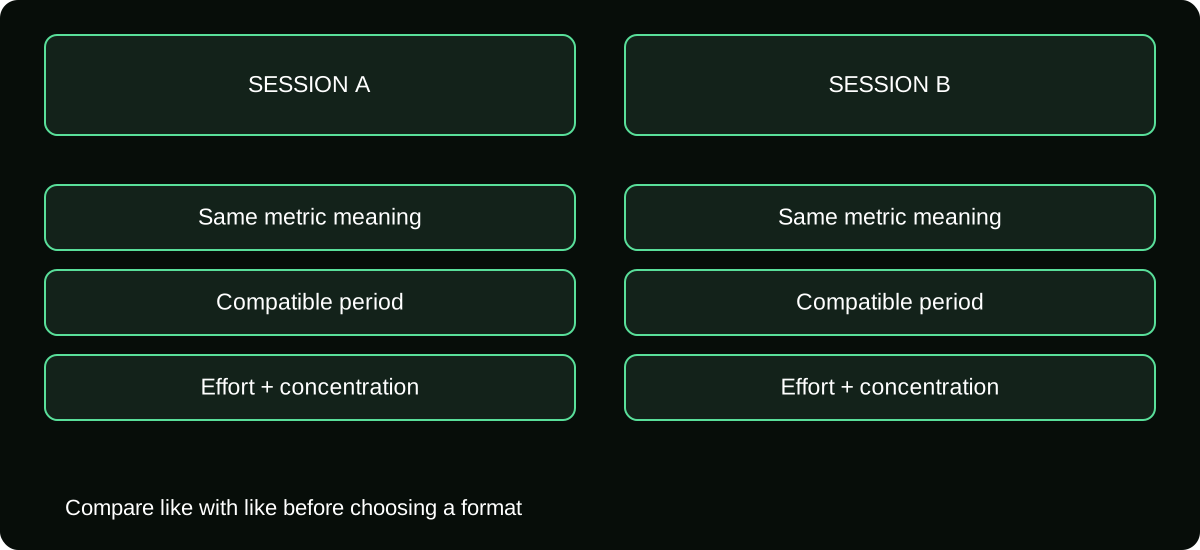
Use the same reward stage across sessions. Do not compare one session's estimated amount with another's fully settled receipt and call the difference a content effect. Match units, period, and status before drawing conclusions.
Inspect concentration rather than only totals
A single unusually large supporter can dominate a session. That may be meaningful appreciation, but it does not prove broad audience conversion or a repeatable earning rate.
Where the platform legitimately provides supporter information, examine whether activity is concentrated and how consistent it is over time. Do not scrape private payment details or pressure a supporter to maintain a target.
If you cannot measure concentration precisely, note that uncertainty rather than estimating private spending from public animations. A cautious observation can still protect planning from assuming an exceptional result is typical.
Test one meaningful content change at a time
For a hook test, keep the topic and general format comparable and record when the invitation occurred. If the schedule, audience source, length, host, and topic all change, the result cannot be attributed confidently to one sentence.
Review several relevant observations rather than declaring a winner from one event. Platform traffic and audience composition can vary in ways you do not control. Treat your log as decision support, not a randomized scientific experiment unless you actually designed one.
Include qualitative evidence: what viewers asked, where the explanation became confusing, and what you promised to deliver. A rise in Gifts coupled with complaints or weaker participation may not represent a better experience.
Keep financial reconciliation outside the performance estimate
Link each session or reward period to its financial records when possible, but preserve the original grouping if the platform pays across sessions. Do not allocate a batch payout to individual broadcasts as if TikTok supplied that breakdown.
Track platform reward statements, payout requests, provider fees, and receipts separately. These records help establish the actual economics after you have evaluated the content experience.
For a monthly review, compare the relevant income and costs with all production time. That can reveal a format that attracts support but is difficult to sustain. It can also reveal that a modest-looking session is efficient and valuable to a returning audience.
Protect account and audience information
Give team members only the access needed for their role. A moderator may need event context without access to payout details or identity documents. A shared spreadsheet should not become a public list of private supporter information.
When evaluating an outside analytics service, inspect its data source, permissions, retention, and limitations. A public-stream tracker should not be represented as a verified account settlement ledger.
Finish each review with one decision: keep a format, change a specific segment, improve the data, or investigate a financial mismatch. Metrics are useful when they change a concrete action, not when they create an impressive dashboard from incompatible counts.
Annotate one comparison before building a dashboard
Choose two sessions you are considering comparable and write a short comparison note. Identify what stayed similar, what changed, which metrics are available in both, and what important information is missing. A schedule change or an outside traffic event may explain more than the hook you are testing.
End the note with a limited conclusion, such as keeping the clearer opening for another test, rather than announcing an unsupported revenue lift. This exercise exposes definition problems before they become colorful charts. A smaller set of comparable observations is usually more useful than many precise-looking fields measured on different bases.
Frequently asked questions
How should I log a LIVE that disconnects and restarts?
Keep the platform’s original session records and note the interruption. If you combine them for an editorial review, label the combination so it is not mistaken for one official uninterrupted session.
Should I remove a session with an unusually large Gift?
Keep the observation and label it. Review results with and without unusual events when planning, rather than deleting data to produce a preferred conclusion.
Can a teammate change metric definitions midway through the log?
Document the change and preserve earlier definitions. Either recalculate compatible periods from source data or keep the series separate; silently changing a denominator makes later comparisons misleading.